24/7 Dispatch Line Open Now

Freezer Repair in USA

From a high-rise kitchen in the biggest metro to a farmhouse at the end of a gravel county road, one call reaches a live dispatcher who routes your broken appliance to a licensed independent pro working nearby. Pick up the phone at any hour and our dispatchers match you with an available technician who covers your area of USA.

  • Licensed and insured independent pros
  • Upfront written quotes
  • Local same-day openings
Licensed Freezer Repair service in USA - Acdc Appliance Repair
Who We Are

A Free Referral Line for Freezer Repair Across USA

Acdc Appliance Repair runs a free phone referral network, not a repair shop. Our job is answering the dispatch line every hour of every day and connecting you with licensed, insured independent appliance pros who already work your part of the state.

How a statewide referral line actually works

A state is not one service area. It is dozens of them stitched together, and each one has its own set of independent technicians, supply houses and drive times. When you call +1-855-636-0185, the dispatcher starts with your location, then the appliance, then the symptom. That order matters. A pro thirty miles away who carries ice maker kits on the truck is often a better match than one ten miles away who would have to order the part.

Every technician we route calls to is an independent business owner with their own schedule, their own insurance and whatever local licensing their trade requires. We are the switchboard between you and them. There is no fee for the call and no obligation to book anything. If the window the dispatcher offers does not work for you, say so, and the dispatcher checks for another available pro.

What to have ready when you call

  • The brand and the model number, usually on a sticker inside the door, under the kick plate or on the back panel
  • What the appliance is doing: error code, noise, smell, leak, no power, or running but not heating or cooling
  • Whether it runs on gas, electric, or both, and whether you are on a private well or city water
  • Who owns the home, if you rent, and the best way for the technician to get in
  • Any gate code, long driveway, or turn that a map app tends to miss on a rural route
Professional Freezer Repair technician working in USA

Why the call starts with questions

Our dispatchers spend every shift hearing appliance symptoms described in plain words, so they ask what a technician would ask on arrival. Is the refrigerator fan running but the fresh food section warm? That points toward a frosted evaporator or a failed defrost heater. An electric dryer that spins cold often has a blown thermal fuse or an open element; a gas dryer with the same complaint usually has a weak igniter or tired valve coils. Passing that detail along lets the pro bring the right parts and the right meter.

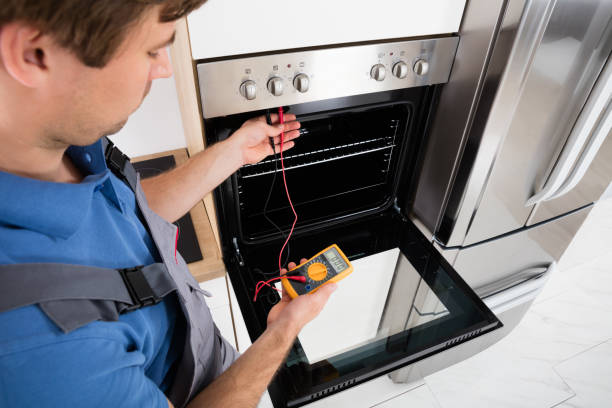
None of this replaces a diagnosis. The independent pro still opens the panel, runs the tests with a multimeter or clamp meter, checks the tech sheet taped inside the cabinet, and tells you what failed. What the phone call does is shorten the trip from broken to running again.

Core Services

Freezer Repair Services Available Throughout USA

Calls to our line cover everything from a home fridge that quit overnight to a restaurant reach-in that has to stay cold through the dinner service, and the network includes pros for each kind of job.

Emergency

After-Hours and Emergency Calls

A climbing freezer temperature with a month of groceries inside, a dishwasher that will not stop filling, an oven element glowing after the knob is turned off: these are the night and weekend calls our dispatchers route first. When an independent pro in your area takes after-hours work, the dispatcher can often get someone moving that evening or first thing the next morning.

  • Refrigerators and freezers losing temperature
  • Dishwashers and washers leaking or overfilling
  • Ranges and ovens stuck on, sparking, or tripping breakers
  • Gas appliances with ignition faults (after the gas utility clears any leak)
Residential

Household Appliance Repair

Most calls on our line are everyday kitchen and laundry repairs: top-load and front-load washers, gas and electric dryers, dishwashers, refrigerators, ranges, cooktops, wall ovens, over-the-range microwaves, ice makers and garbage disposals. The technician tests the suspect part, explains what failed, and writes up a quote before any work begins.

  • Washer drain pumps, lid switches, door locks and drive belts
  • Dryer igniters, thermal fuses, heating elements and idler pulleys
  • Refrigerator defrost systems, start relays, fan motors and water valves
  • Range igniters, bake and broil elements, oven sensors and control boards
Commercial

Light Commercial Equipment

We also route calls from cafes, church and school kitchens, coin laundries, apartment laundry rooms and small grocers. Commercial work runs on a different clock: a reach-in cooler that drifts above safe holding temperature or a commercial washer stuck on a drain error costs real money every hour. The dispatcher matches these calls with independent pros who carry commercial refrigeration experience and the gauges, recovery equipment and EPA Section 608 certification that sealed-system work requires.

  • Reach-in coolers, prep tables and under-counter freezers
  • Commercial and coin-operated washers and dryers
  • Ice machines, including scale and water filter problems
  • Ask the pro about after-hours availability for businesses
Specialized

Built-In, Gas and Specialty Units

Some jobs need a technician who works on a specific type of equipment every week: built-in column refrigerators, dual-fuel ranges, induction cooktops, steam ovens, wine coolers and compact laundry stacks in tight closets. Gas work gets special attention: the pro uses a manometer to check gas pressure at the appliance and a leak detector on every fitting they touch.

  • Induction boards and cooktop glass faults
  • Dual-fuel range ignition and control issues
  • Built-in refrigerator sealed systems and inverter compressors
  • Stacked and compact laundry in tight spaces
Safety first: Smell gas? Do not touch switches, plugs or the appliance. Get everyone outside, call the gas utility or 911 from a safe distance, and call us after the utility says it is safe to go back in.
Seasonal Demand

What Breaks When: A Year of Appliance Calls in USA

Appliance failures follow the seasons more than most people expect. If you know what tends to break and when, you can catch the early signs and get on a pro's schedule before demand peaks.

SeasonCommon failuresWhat to watch
Summer heatRefrigerator compressors running nonstop, condenser fans failing, garage freezers losing temperature, ice makers slowing downWarm fresh food section, a compressor that never cycles off, frost on the back wall of the freezer, a garage unit that feels warm on the sides
FallWasher drain pumps and dryer belts under heavy back-to-school and sports loads, dryer vents clogged with summer lintLong dry times, a burning smell at the dryer, water left in the washer tub, squealing on spin
Holiday bakingBake elements burning out, oven temperature sensors drifting, gas range igniters that click without lighting, self-clean cycles that blow thermal fusesOven slow to preheat, uneven browning, a glowing spot on the element, an oven that stays dark after a self-clean
WinterFrozen supply lines to ice makers and washers in unheated spaces, garage freezers that stop running in deep cold, dryer heating issuesNo ice, washer that will not fill, garage freezer thawing on a cold night, condensation inside the dryer drum
SpringWashers and dryers working through bedding and outdoor gear, dishwashers clogged after heavy entertaining, dehumidifier and mini fridge revivalsOff-balance errors, drain faults, gritty dishes, a musty smell from a front-load gasket
Storm seasonControl boards and inverter boards damaged by surges, compressors that will not restart after an outage, tripped GFCI outletsBlank displays, error codes after the power returns, a fridge that hums but will not cool, breakers that trip on restart

Summer: heat stress on refrigerators and garage freezers

Summer is the hardest season on refrigeration. A refrigerator condenser moves heat out of the cabinet and into the room, and when the kitchen runs hot the compressor simply has to work longer. Garage freezers have it worse. Many are rated for a narrow ambient range, and a garage that hits triple digits in the afternoon can push a unit past what it was built to handle. A five-minute coil cleaning and some breathing room behind the unit go a long way toward getting a fridge through the hot months.

Holidays: oven failures right before the big meal

A classic holiday call goes like this: the oven gets a self-clean to prepare for guests, the cavity hits extreme heat for hours, and afterward the oven is dead. Self-clean pushes the cavity to extreme temperatures, and that heat can take out a thermal fuse, a weak bake element or the control board. With guests on the way, clean the oven by hand and run self-clean some other month.

Reliable Freezer Repair contractor in USA by Acdc Appliance Repair

Storm season: surges, outages and what to do when the power comes back

Storms bring two kinds of appliance trouble. The first is the surge, which can damage control boards, inverter drives and the electronics in newer refrigerators and washers. The second is the outage itself, which leaves a refrigerator and freezer sitting with no power for hours or days. When the power comes back, give the house a few minutes before restarting large appliances, since voltage can be unstable at first. If the refrigerator hums but does not cool, or a display shows an error code that will not clear, note the code and call the dispatch line. Food safety comes first: a thermometer reading is more reliable than a guess, and anything that sat above safe temperature for too long should go.

Why Call Us

Why USA Homeowners Use Our Referral Line

We are upfront about what we are and what we are not. The value of the line is getting you to the right independent pro quickly, with clear expectations about how the visit will go.

Upfront Written Quotes

Before a single part is changed, the pro gives you a written quote based on the diagnosis. Nothing happens until you say yes. Some pros price by the job and others by parts plus labor, and either way the number is on paper first.

Fast Local Dispatch

Because the line routes calls to pros who already work your area, nobody is driving across the state to reach you. When a local technician has a free slot, a same-day appointment is realistic, and you leave the call knowing the arrival window.

Independent, Licensed and Insured Pros

Every pro in our network runs an independent business and carries insurance. Licensing rules for appliance work vary by state and locality, so you are always welcome to ask the technician for proof of license and insurance.

Clear Expectations

You hear how the visit works before anyone arrives: the arrival window, whether there is a diagnostic or trip fee set by the pro, and what happens if a part has to be ordered. Warranty terms on parts and labor usually come in writing from the technician, so ask for it.

What a good visit looks like

Good pros do not guess with parts. They watch the problem happen if it is safe, find the tech sheet, and test each suspect component in turn. On a no-heat dryer that means checking continuity on the thermal fuse, the cycling thermostat and the element. On a warm refrigerator it might mean reading the defrost thermostat, checking the evaporator fan, and listening at the compressor for a start relay clicking on and off. After that, the pro should show you the meter reading and say what it means without jargon.

If the repair costs more than the appliance is worth, a straight technician will say so. That conversation is part of the job, and you should never feel pushed in either direction.

How It Works

Four Steps Between Your Call and a Fixed Appliance

The process is the same whether you live a few blocks from a supply house or an hour down a county road. Only the timing changes.

  1. Call Dispatch

    Call +1-855-636-0185 any hour. A dispatcher asks where you are, what appliance is down, and what it is doing. Have the model number handy if you can find it.

  2. Get Matched

    We look at which independent technicians serve your area and handle that appliance, then share the arrival window before you hang up. If the first window does not suit you, ask for another.

  3. Diagnosis and Written Quote

    The technician tests the appliance, explains what failed, and gives you a written quote before starting. You approve it or you do not.

  4. Repair and Follow-Through

    Common parts usually get installed the same visit, and special-order parts mean a second trip that the pro schedules with you. Ask for the warranty terms in writing.

How parts get sourced

Most independent pros keep a stock of the parts that fail most often: igniters, thermal fuses, door switches, drain pumps, defrost heaters and thermostats, start relays, water inlet valves, belts and idler pulleys. Those repairs often finish in one visit.

Control boards, inverter boards, sealed system components, specific door gaskets and anything for a less common brand usually have to be ordered. A typical special-order part arrives in a few business days, though some brands or discontinued models take longer, and rural addresses can add a day for shipping. Ask the technician for an expected arrival date and whether they need a deposit to order the part.

Affordable Freezer Repair solutions in USA

Want a Pro Looking at It Soon?

One call and a dispatcher checks the independent pros who work your part of USA.

Call +1-855-636-0185
Know Before You Call

Water, Rentals, Gas and Local Rules Across USA

Some details change a repair more than the appliance brand does: the water coming into the house, who owns the property, whether there is a gas line, and what your local rules require.

Water

Well Water and Hard Water

Homes on private wells and in hard water areas see the same pattern again and again: mineral scale on dishwasher heating elements, clogged washer inlet screens, and ice makers that produce small, cloudy cubes or stop altogether. Sediment from a well can plug the fine screen in a water inlet valve in a few months, and iron in the water leaves orange staining in tubs and on spray arms. Tell the dispatcher if you are on a well or use a softener, because it changes what the pro checks first.

  • Change refrigerator water filters on schedule, sooner on a well
  • Clean washer and dishwasher inlet screens when fill slows
  • Run dishwasher cleaner monthly in hard water
  • Ask the pro about a sediment prefilter for the ice maker line
Rentals

Rental Housing: Who Calls and Who Pays

Every rental call has to settle three things first: who owns the appliance, who signs off on the cost, and who opens the door. In most leases the landlord owns the built-in appliances and is responsible for repairing them, but every lease is different, so tenants should check theirs and notify the landlord or property manager in writing. Either side can call our line. The dispatcher notes who is paying and who is meeting the pro so nobody gets a surprise.

  • Tenants: report the problem to the landlord first
  • Landlords: give the dispatcher a contact for approval
  • Agree on access before the pro is booked
  • Ask the pro for a written invoice for your records
Gas

Gas Appliances and the Gas Utility

An appliance pro handles the range, dryer or other gas appliance itself, while the meter and service line are the gas utility's, and the piping between them is part of the house. If you smell gas, the utility comes first. Most utilities respond to leak reports at no charge, and they can shut off service until the home is safe. Once the utility clears it, the independent pro can check the appliance connector, test with a manometer and leak detector, and reset ignition.

Rules

Licensing and Permits Vary by Locality

Licensing for appliance repair is not uniform. Some states and localities license appliance technicians directly, some require a license only for gas or refrigerant work, and some leave it to local code officials. Installing a new gas line or moving an appliance onto a new circuit may need a permit where you live. Because these rules vary, verify the license and insurance of any pro before work starts, and ask whether your job needs a permit. Refrigerant work is the exception that applies everywhere: the technician must hold EPA Section 608 certification.

Can one pro handle both gas and electric?

Many technicians are comfortable on both, which helps in homes with a gas range and an electric wall oven, or a gas dryer next to an electric washer. Tell the dispatcher every appliance you want looked at so the pro you are matched with handles all of them, and ask about gas qualifications where your locality requires them.

Caller Stories

What Callers Across USA Tell Us

Here is how a few recent calls went, as the callers told it.

Our chest freezer in the barn quit during a heat wave with half a steer inside. We are a long way out on a gravel road, and I figured nobody would come. The dispatcher found a pro who covers our end of the county, and he showed up that evening with a start relay and a capacitor on the truck.

Wade H.Homeowner, USA

Move-in week brought three broken washers across my student rentals. I called once and the dispatcher lined up one technician for all three. Two pumps were jammed with socks and coins, and the third needed a lid switch.

Priya S.Property manager, USA

Two days before a family holiday dinner, I ran self-clean and the oven went dark. The tech found a blown thermal fuse, showed me the meter reading, and wrote up the quote before touching anything. It was baking again the next morning.

Lorraine M.Homeowner, USA

After a storm knocked our power out overnight, the fridge came back on but never got cold. The pro checked the compressor and the control board, found the board took the surge, and had to order one. He told me it would be a few business days, and it showed up when he said.

Marcus T.Homeowner, USA

We are on well water and the ice maker kept making tiny, cloudy cubes. The technician pulled the inlet valve, found the screen packed with sediment, and suggested a prefilter on the line. Ice has been fine since.

Elena V.Homeowner, USA
Top rated local Freezer Repair specialists in USA
FAQ

Freezer Repair Questions From Callers in USA

How fast can a Freezer Repair technician arrive in USA?

It depends on where you are and how busy the local pros are that day. Same-day visits are common in metro areas and suburbs when a pro has an opening, while small towns and rural routes may need a next-day slot. The dispatcher reads you the arrival window before you hang up.

Do the pros provide upfront pricing?

Yes. The technician diagnoses the problem and gives you a written, upfront quote before any work starts, and you decide whether to proceed. Ask on the call whether the pro charges a diagnostic or trip fee.

What emergency services are available after hours?

The dispatch line is answered 24/7. Many independent pros take after-hours calls for failing refrigerators and freezers, active leaks and ovens that will not shut off. If no one can come that night, the dispatcher books the first morning opening.

Do you cover small towns and rural areas in USA?

Yes. The network includes independent pros who serve small towns, county seats and rural routes. Drive times are longer and arrival windows wider, so give the dispatcher a crossroads or landmark and mention any gates or long driveways.

Who should call when a rental's appliance breaks, the tenant or the landlord?

Either one can call. In most leases the landlord owns and repairs the major appliances, so tenants should notify the landlord in writing first. The dispatcher records who is authorizing and paying for the visit and who will let the pro in.

What should I do with my fridge after a power outage?

Leave the doors shut during the outage. Once power is back, give the line a few minutes to settle, then check temperatures with a thermometer a few hours later. A fridge that runs but stays warm, or an error code that will not clear, is worth a service call.

Can the same pro handle gas and electric appliances?

Often, yes. Many independent technicians work on gas ranges, gas dryers and electric appliances alike. List every appliance on the call so the dispatcher matches a pro who handles all of them, and confirm any gas credentials your locality requires.

How long do special-order parts take?

Common parts are often on the truck. Control boards, sealed system parts and less common brand parts usually ship in a few business days, with some backorders running longer. Rural addresses may add a day, and the pro gives you an expected date.

Appliance Down Somewhere in USA?

The dispatch line is answered every hour of the day, and the call is free.

Call +1-855-636-0185
Statewide Coverage

How the Network Covers Every Kind of Place in USA

Coverage looks different in a dense metro than it does on a two-lane highway between farm towns. Here is how dispatch works across the full spread of places throughout USA.

Metros

Big Metro Areas

The largest metro areas have the deepest bench of independent pros, which is why same-day visits are most common there. The tradeoff is traffic and building access: high-rise units with loading dock rules, freight elevator reservations and parking that takes longer to find than the repair takes to finish. Tell the dispatcher about any building rules up front so the pro can plan for them.

Suburbs

Suburbs and Commuter Towns

Suburban homes often have newer machines with more electronics, like French door fridges with dual evaporators, inverter-drive front loaders and ranges with glass touch controls. Pros working these areas usually carry a laptop or service app for pulling up fault code tables and wiring diagrams on site.

College Towns

College Towns and Student Rentals

College towns spike at move-in and move-out. Shared washers in rental houses get overloaded, mini fridges get stuffed into closets with no airflow, and a dishwasher left idle all summer comes back with a seized pump. Many of these calls come from property managers rather than tenants, so the dispatcher confirms who approves the work before booking.

Small Towns

Small Towns and County Seats

In smaller towns, one or two independent technicians may cover the whole area, and they often remember which brands give trouble on which streets. Their schedules fill fast in busy seasons, so a visit might be the next day rather than the same day. If the local pro is booked, the dispatcher can check whether a technician from a neighboring town is willing to make the drive.

Rural Routes

Rural Routes and Farm Country

Rural calls are where dispatch earns its keep. A farmhouse with a chest freezer full of beef, a well pump feeding a washer, and a long gravel drive is a very different job from a city kitchen. Expect a longer drive time and a wider arrival window, and expect the pro to ask more questions before leaving, since a second trip for a forgotten part can cost an entire afternoon.

Lake and Seasonal

Vacation and Seasonal Homes

Cabins and seasonal homes bring their own problems, like machines that sat idle for a season, supply lines that were never drained, and owners who live a long drive away. Let the dispatcher know if a caretaker or neighbor will meet the technician, and share any lockbox details only with the pro directly.

How dispatch handles long rural drive times

On a rural call, the dispatcher looks at three things: which independent pros actually drive out that far, what parts they keep on the truck, and how the day is stacking up. Some technicians group their rural calls on certain days of the week to keep drive time reasonable, so the first opening might be a specific morning rather than the next available hour. Ask whether the pro charges for travel at that distance, since each independent sets their own trip fee.

  • Give the dispatcher the nearest crossroads or mile marker, not just the mailing address
  • Mention gates, dogs, low bridges or soft driveways after rain
  • Send a photo of the model tag if the pro asks, so the right part rides along
  • Keep your phone on, since rural cell coverage can drop the pro's call on the way out
24/7 Emergency Freezer Repair experts in USA

Coverage throughout USA is not the same on every road, and we would rather tell you that straight than set the wrong expectation. What we can do is check the independent pros who serve your area, tell you the realistic arrival window on the call, and keep looking if the first option does not fit. The county and city lists further down the page show the places our line routes calls to most often.

Our Services in USA

Call +1-855-636-0185
🟢 Techs On Duty in USA Call +1-855-636-0185